Trimming That Protects Property and Tree Health
Tree Trimming and Pruning in Robbinsville for Overgrown Limbs, Storm Damage, and Long-Term Structure
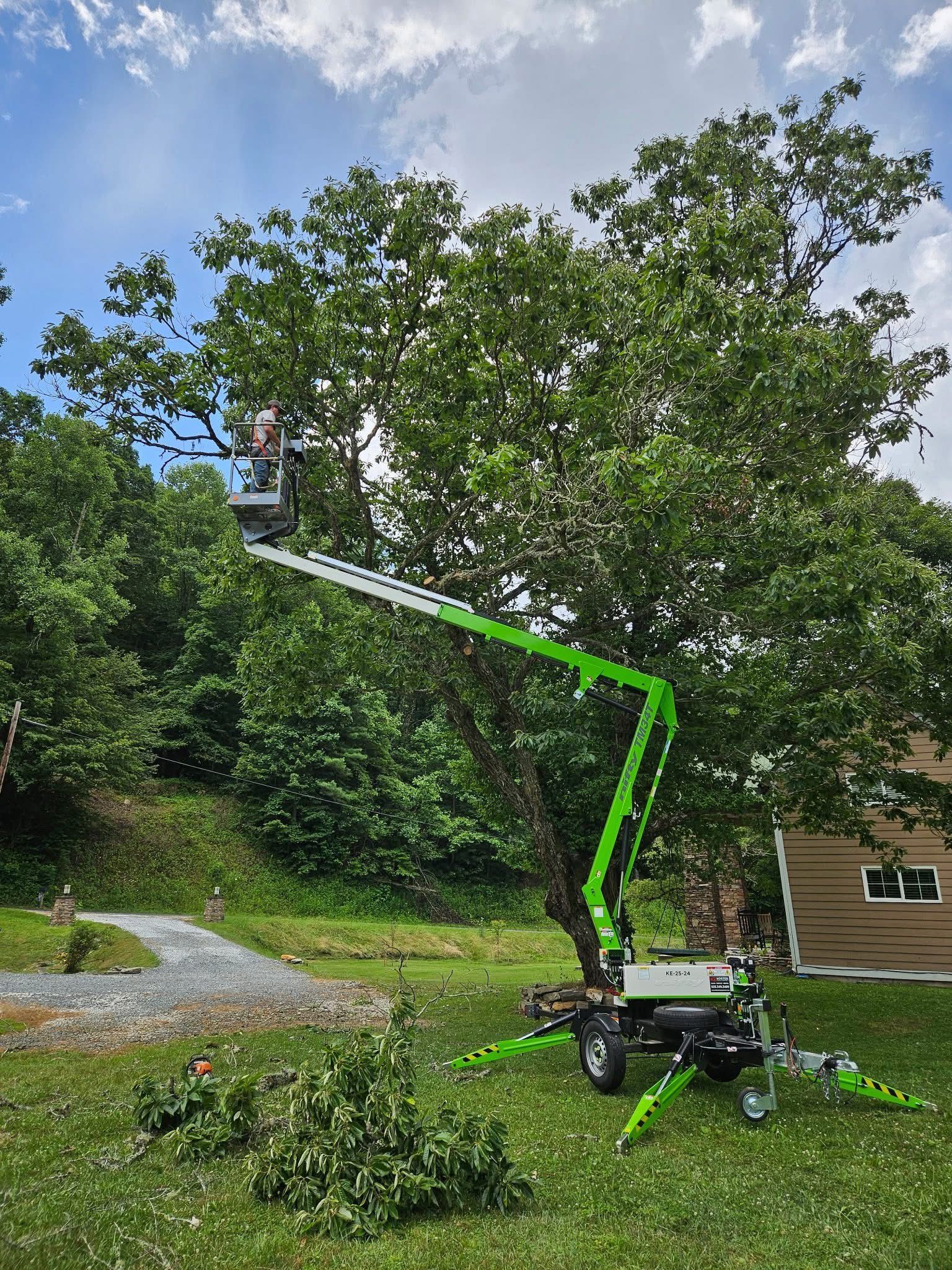
Overgrown branches scrape roofs, block sunlight, and become weighted hazards during ice storms common at higher elevations in Western North Carolina. Trimming removes these problem limbs while maintaining the tree's overall health and natural shape. A.B. Land & Tree Service performs this work using bucket trucks and professional cutting techniques that prevent tearing bark or leaving stubs that invite decay.
Proper pruning involves selective removal of damaged, crossing, or poorly attached limbs rather than indiscriminate cutting. Cuts are made at the branch collar, the swollen area where the limb meets the trunk, which allows the tree to seal the wound naturally and resist infection.
Arrange an on-site consultation to review which limbs require removal and discuss timing based on tree species and current growth patterns.
How Strategic Pruning Reduces Future Problems
Trimming decisions depend on the tree's structure, age, and location. Young trees benefit from training cuts that establish strong scaffold branches, while mature trees require removal of deadwood and limbs that have grown too close to structures or utility lines. Equipment access determines whether work proceeds from a bucket truck, ladder, or by climbing, with steeper properties in Robbinsville often requiring lift positioning to reach upper canopy growth safely.
After pruning is complete, your property receives more natural light in previously shaded areas, and you no longer hear branches scraping against siding or roofing during wind. Trees develop better weight distribution, which reduces limb breakage during storms. The canopy opens enough to allow air circulation, decreasing fungal growth and pest pressure that thrive in dense, unmanaged foliage.
Trimming does not include stump work or full tree removal, though it can be combined with those services during the same visit if other trees require removal. Cleanup involves hauling away all cut branches and debris unless you request that material be chipped and left on-site as mulch.
Residents often want to know what trimming involves, how much to remove, and when to schedule the work for best results.
Answers to Frequent Service Questions
How much of a tree's canopy can be safely removed at one time?
Removing more than twenty-five percent of the canopy in a single session stresses most tree species and limits their ability to photosynthesize and recover. Severe overgrowth may require pruning staged across multiple years to avoid shock.
What is the difference between trimming and topping?
Trimming selectively removes individual limbs at proper cut points, while topping indiscriminately cuts back all branches to stubs. Topping destroys tree structure, creates weak regrowth, and shortens the tree's lifespan. Professional pruning never involves topping.
When should you trim trees to avoid attracting insects?
Oaks should not be pruned between April and July in North Carolina, as fresh cuts during this period attract oak wilt-carrying beetles. Most other hardwoods are best trimmed during dormancy, late fall through early spring, when insect activity is minimal.
Why does trimming cost vary between properties in Robbinsville?
Access difficulty, tree height, proximity to obstacles, and the volume of material to be removed all affect labor and equipment time. Steep terrain or trees near power lines require additional rigging and safety measures that increase the work scope.
How often should established trees be trimmed?
Most mature trees benefit from inspection and selective pruning every three to five years. Trees near structures, over driveways, or with a history of storm damage may need more frequent attention to manage risk.
A.B. Land & Tree Service offers free estimates that include evaluation of tree health and specific recommendations for which limbs to remove. Proper equipment and nine years of hands-on experience allow trimming work to proceed safely and with attention to each tree's long-term structure and health.